
How to Convert Cold Traffic: Capture the Lead Before You Try to Make the Sale
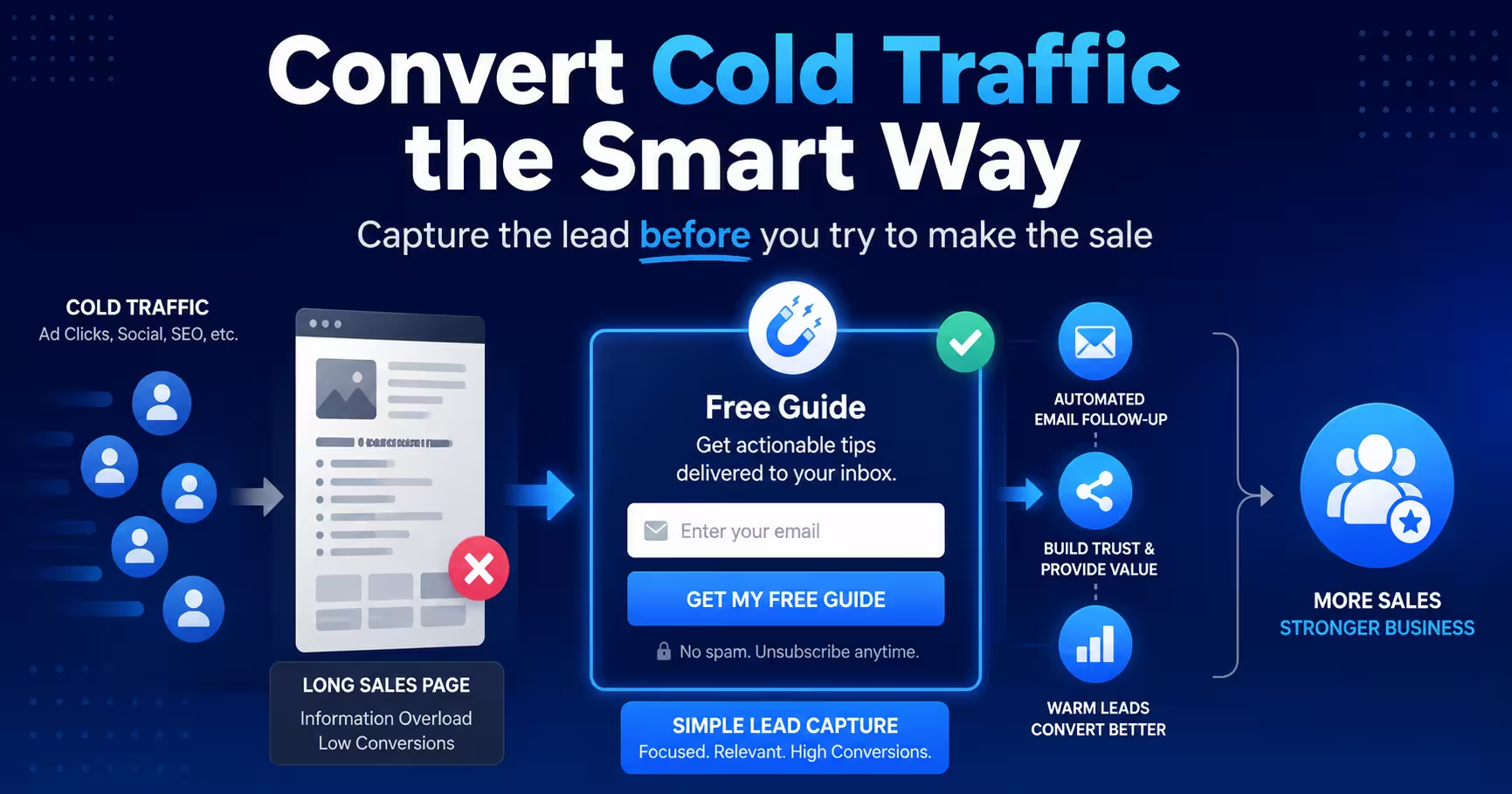
You bought traffic.
The clicks started coming in.
You watched your stats.
And then…
No sales.
Maybe very few leads.
Maybe nothing at all.
It’s easy to immediately conclude:
“The traffic didn’t work.”
Sometimes traffic quality really is the problem. There is plenty of low-quality, automated, recycled, or poorly targeted traffic being sold online.
But there’s another problem we see constantly:
Real visitors are being sent into a funnel that was never designed for cold traffic.
A marketer buys traffic and sends every visitor directly to a long sales page, affiliate presentation, business opportunity, webinar registration page, company replicated website, or information-heavy offer.
Then they expect a complete stranger to understand the offer, trust the person presenting it, overcome every objection, and buy — all from one click.
That’s asking a lot.
For many offers, there’s a better approach.
Instead of trying to make the sale immediately, capture the lead first and continue the conversation afterward.
The basic funnel looks like this:
Cold Traffic → Focused Capture Page → Lead → Bridge/Offer Page → Follow-Up → Sale
That small change in strategy can completely change how you evaluate — and use — paid traffic.
What Is Cold Traffic?
Cold traffic simply means visitors who have little or no previous relationship with you.
They may not know:
- Who you are
- What your company does
- Why they should trust you
- Whether your offer is legitimate
- Why your solution is different
- Whether your product is right for them
Compare that with someone who has read several of your emails, watched your videos, followed you on social media, or previously visited your website.
That person is warmer.
A cold visitor is starting at zero.
And that’s important because the amount of commitment you ask for should make sense for the amount of trust you’ve built.
If someone has never heard of you before, asking for an email address can be a much smaller step than asking them to read a 15-minute presentation, understand an unfamiliar business model, enter payment information, or commit to a program.
The Big Mistake: Treating Every Click Like a Buyer
Traffic gets people to your page.
That’s its job.
It doesn’t mean every person who arrives is ready to purchase whatever happens to be on the other side of the click.
Imagine running an ad that attracts 500 legitimate prospects.
If your destination page doesn’t communicate the right message, creates too much friction, or asks for too much commitment too quickly, those visitors can leave without taking action.
The traffic existed.
The conversion didn’t.
That’s why traffic quality and funnel performance are two different things.
A traffic source controls who arrives and, to some degree, how closely those visitors fit the targeting.
Your funnel controls what happens next.
That includes your:
- Headline
- Offer
- Capture page
- Copy
- Trust elements
- Call to action
- Page speed
- Mobile experience
- Pricing
- Follow-up
- Email sequence
- Sales process
If 100 people enter a store and nobody buys, you wouldn’t automatically conclude that all 100 people were fake.
You’d also look at what happened after they walked through the door.
Online marketing works the same way.
Cold Traffic Usually Needs a Simpler First Step
One of the most useful questions you can ask when building a funnel is:
What is the ONE action I want this visitor to take right now?
Not eventually.
Right now.
With a cold visitor, that first action will often be becoming a lead.
For example:
Enter your email to get the free guide.
See the 5-step training.
Get the checklist.
Watch the free presentation.
See how the system works.
You’re not asking them to make every decision at once.
You’re asking them to take one small, relevant next step.
Once they do, you’ve created something far more valuable than a single anonymous website visit.
You’ve created an opportunity to follow up.
A Better Cold Traffic Funnel
Here’s the structure we recommend considering for many affiliate, MLM, network marketing, MMO, lead-generation, and information-based campaigns:
Step 1: Paid Traffic
A real person sees your ad, email promotion, solo ad, PPC listing, SMS message, or other promotion and clicks.
Your traffic source has now done its primary job:
It delivered the visitor.
Now your funnel has to do its job.
Step 2: A Focused Capture Page
Instead of immediately dropping that visitor into a long presentation, send them to a simple page designed around one conversion goal.
Usually, that’s an opt-in.
A good capture page doesn’t need to explain your entire business.
It needs to answer a few immediate questions:
Why should I care?
What am I getting?
Why should I believe this is relevant to me?
What do I do next?
That’s it.
Avoid turning your capture page into a miniature sales page with ten different options.
Keep the decision simple.
Step 3: Capture the Contact Information
For many funnels, a first name and email address are enough to begin.
Every additional field creates another decision and another opportunity for the visitor to abandon the form.
If you genuinely need more information, such as a phone number or qualifying questions, test it.
You can also use a multi-step form rather than presenting everything at once.
The key is understanding the tradeoff:
More information may create a better-qualified lead, but it can also reduce the number of people who complete the form.
There isn’t one perfect form for every campaign.
Test what makes sense for your offer.
Your Capture Page and Traffic Message Must Match
One of the fastest ways to lose a cold visitor is to create a disconnect between what got the click and what appears on the landing page.
If your traffic promotion says:
“Discover 5 Ways Affiliate Marketers Can Generate More Leads”
…and the visitor lands on a page talking about something completely different, you’ve created confusion.
Your page should continue the conversation that started before the click.
Use similar:
- Language
- Headlines
- Benefits
- Imagery
- Positioning
The visitor should immediately feel:
“Yes. This is what I clicked for.”
Don’t make them figure it out.
Cold traffic gives you very little existing trust to work with.
Confusion burns through that trust quickly.
Your Capture Page Should Have ONE Primary Goal
A landing page is not the same thing as a regular website homepage.
A homepage might legitimately have links to:
Products.
About pages.
Blog posts.
Customer support.
Pricing.
Social accounts.
Contact information.
And dozens of other places.
A focused landing page should be different.
If the goal is capturing a lead, don’t give the visitor 12 other interesting things to click instead.
Every unnecessary option competes with the conversion you actually paid for.
For many campaigns, think:
One page. One primary message. One primary action.
That doesn’t mean the page has to be tiny.
It means everything on the page should support the same objective.
Don’t Make People Work to Understand Your Headline
Your headline has an enormous job.
A cold visitor should not have to study it.
Avoid vague headlines such as:
Welcome to My Website
Change Your Future Today
A Better Way Is Here
Discover the Opportunity
These might sound exciting to the person who created the page, but they don’t tell a cold visitor much.
Specific is usually clearer.
For example:
Get the Free 7-Step Checklist for Building Your First Affiliate Marketing Funnel
Or:
Discover How to Capture More Leads From the Traffic You’re Already Buying
The visitor immediately understands the subject and potential benefit.
Your subheadline can then explain how you’re helping them accomplish that result.
Clarity beats cleverness.
Especially with cold traffic.
Don’t Hide the Next Step
Once someone lands on the page, it should be painfully obvious what they’re supposed to do.
If you’re collecting leads, make the opt-in form or CTA easy to find.
Your CTA should also tell people what they’re getting.
Compare:
SUBMIT
with:
Send Me the Free Guide
Or:
GET STARTED
with:
Show Me the 5-Step System
The second versions continue selling the benefit.
The button isn’t merely telling someone to click.
It’s reminding them why they’re clicking.
Need a Better Page for Your Traffic?
Sending paid visitors to a page that wasn’t designed to capture cold traffic can waste opportunities before your follow-up ever begins.
Extreme Lead Program can build a focused squeeze page designed specifically for lead capture — so your traffic has one clear action to take.
What Happens After the Opt-In Is Just as Important
This is where a lot of marketers make another mistake.
They build the capture page.
Someone becomes a lead.
And then…
Nothing.
Maybe one automated email arrives.
Maybe the visitor gets redirected straight to an affiliate link.
Maybe they’re never contacted again.
That’s leaving much of the value of the lead on the table.
Capturing the email isn’t the finish line.
It’s the beginning of the follow-up process.
After someone opts in, you can continue educating them through:
- Email follow-up
- SMS follow-up where appropriate and consented
- Additional content
- Case studies
- Testimonials
- FAQs
- Videos
- Product demonstrations
- Offers
- Retargeting
- Personal contact
Now you don’t need your first traffic click to accomplish everything.
You can build familiarity over time.
Use a Bridge Page Between the Opt-In and Main Offer
After the visitor becomes a lead, don’t automatically waste the next page with:
Thanks! Check your inbox.
You already have their attention.
Use it.
A bridge or thank-you page can prepare them for the offer they’re about to see.
For example:
Step 1: Check your email for the guide.
Step 2: Watch this short video to see how the strategy works.
Step 3: Click below to see the complete solution.
Now the transition into the primary offer makes sense.
Instead of:
Cold stranger → Sales pitch
you’ve created:
Interested visitor → Lead → Context → Offer
That’s a much more intentional customer journey.
Why Email Follow-Up Changes the Economics of Traffic
Here’s another reason capturing leads matters:
Without lead capture, every person who leaves your sales page may be gone forever.
You paid for the click.
They arrived.
They didn’t buy.
The relationship ends.
But if that person becomes a lead first, the initial visit no longer has to produce the entire return on your traffic investment.
You have another opportunity tomorrow.
And the day after that.
And next week.
A prospect who isn’t ready today might be ready later.
A prospect who doesn’t understand the offer today may understand it after several emails.
A prospect who doesn’t trust you today may respond differently after seeing useful content, testimonials, answers to objections, and consistent communication.
This is why good marketers don’t only ask:
“How many sales did this traffic generate immediately?”
They also ask:
“How many leads did it create, and what happened to those leads afterward?”
This Is Even More Important on Mobile
Don’t assume your visitor is sitting at a desk with 30 uninterrupted minutes available.
They may be looking at your page on a phone while:
Waiting in line.
Watching TV.
Sitting in a parking lot.
Taking a break.
Moving between apps.
A complicated process that feels acceptable on a desktop can feel painful on a phone.
Long forms are harder.
Tiny buttons are harder.
Dense paragraphs are harder.
Complex navigation is harder.
That makes a simple first conversion particularly attractive for many mobile campaigns.
Rather than requiring the visitor to finish an entire transaction immediately, you may be better off capturing the relationship and continuing it later.
But Does This Mean You Should Never Send Traffic Directly to a Sales Page?
No.
There are very few universal rules in conversion optimization.
Direct-to-offer traffic can work.
It may make perfect sense when:
- The offer is simple
- The price requires little consideration
- The visitor already has strong buying intent
- Your traffic is warm
- Your audience already knows the product
- The sales page has been tested successfully with that traffic source
- You’re optimizing for purchases and have data showing the funnel works
The mistake is assuming that because a sales page exists, every type of traffic should be sent directly to it.
Test.
Measure.
Improve.
A capture-first funnel is not magic.
It’s simply a strategy that gives you another opportunity to convert visitors who aren’t ready to make the final decision on their first visit.
Real Traffic Cannot Fix a Weak Funnel
This is one of the most important lessons in paid traffic.
Traffic amplifies what you already have.
If you have a strong funnel, more qualified traffic gives that funnel more opportunities to produce results.
If you have a confusing funnel, more traffic gives more people the opportunity to become confused.
If your page doesn’t work on mobile, more mobile traffic won’t fix it.
If the offer doesn’t resonate, additional clicks won’t rewrite the offer.
And if you’re sending cold prospects into a page designed for warm prospects, purchasing more traffic may simply reproduce the same result at a larger scale.
That’s why you shouldn’t evaluate traffic and landing pages as if they’re the same thing.
At Extreme Lead Program, our job is to focus heavily on the traffic side of that equation — real visitors, traffic quality, delivery, and what happens after the click.
Your funnel still has to turn those visitors into leads and customers.
The two pieces work together.
Don’t Judge Everything by Sales Alone
Obviously, sales matter.
That’s ultimately why most businesses advertise.
But sales are the end of a process.
If you’re trying to diagnose a campaign, look at the steps leading up to the sale.
For example:
Clicks → Page Loads → Engagement → Opt-Ins → Follow-Up → Sales
Suppose you receive plenty of legitimate visitors but almost nobody opts in.
That points you toward the landing page, message, offer, or form.
Suppose you get plenty of leads but nobody opens your follow-up emails.
Now you have a different problem.
Suppose people open and click the emails but nobody purchases.
That’s different again.
This is much more useful than looking at the end of the funnel and concluding:
“No sales = bad traffic.”
You want to know where the funnel is breaking.
A Simple Cold Traffic Funnel You Can Build
If you’re currently sending paid traffic straight to a complicated sales page, try testing this instead:
- Create a focused capture page around one strong benefit or lead magnet.
- Ask for only the information you actually need to start the relationship.
- Match the headline and message to the promotion generating the traffic.
- Send new leads to a bridge page that introduces the main offer.
- Build an email follow-up sequence that continues educating and selling.
- Track each stage separately so you know where conversions are being lost.
- Test changes instead of guessing.
You don’t need a giant funnel.
You need a logical one.
The Goal Isn’t Just More Clicks. It’s More Opportunities to Convert.
Buying traffic should not be about watching a click counter increase.
A click represents an opportunity.
But what you do with that opportunity matters.
Cold visitors don’t know everything you know about your offer.
They haven’t read all your emails.
They haven’t watched your videos.
They haven’t seen your success stories.
They haven’t had time to develop trust.
So don’t automatically demand the biggest possible commitment from them first.
Give them a reason to take the next small step.
Capture the lead.
Continue the conversation.
Build trust.
Present the offer.
Follow up.
Measure what happens.
Then improve the part of the funnel that’s actually holding you back.
Real traffic gets people through the door.
A well-built funnel gives them a reason to stay.
Want the Traffic AND the Funnel Working Together?
Getting real visitors is only one piece of lead generation.
Extreme Lead Program can help with the pieces around the traffic too — including capture pages, follow-up systems, CRM tools, and traffic designed for marketers who want leads rather than vanity clicks.
Real clicks. Real people. And a better system for turning those clicks into opportunities.
Related Topics:
Leave a Reply