
Custom Squeeze Page Design That Converts Traffic
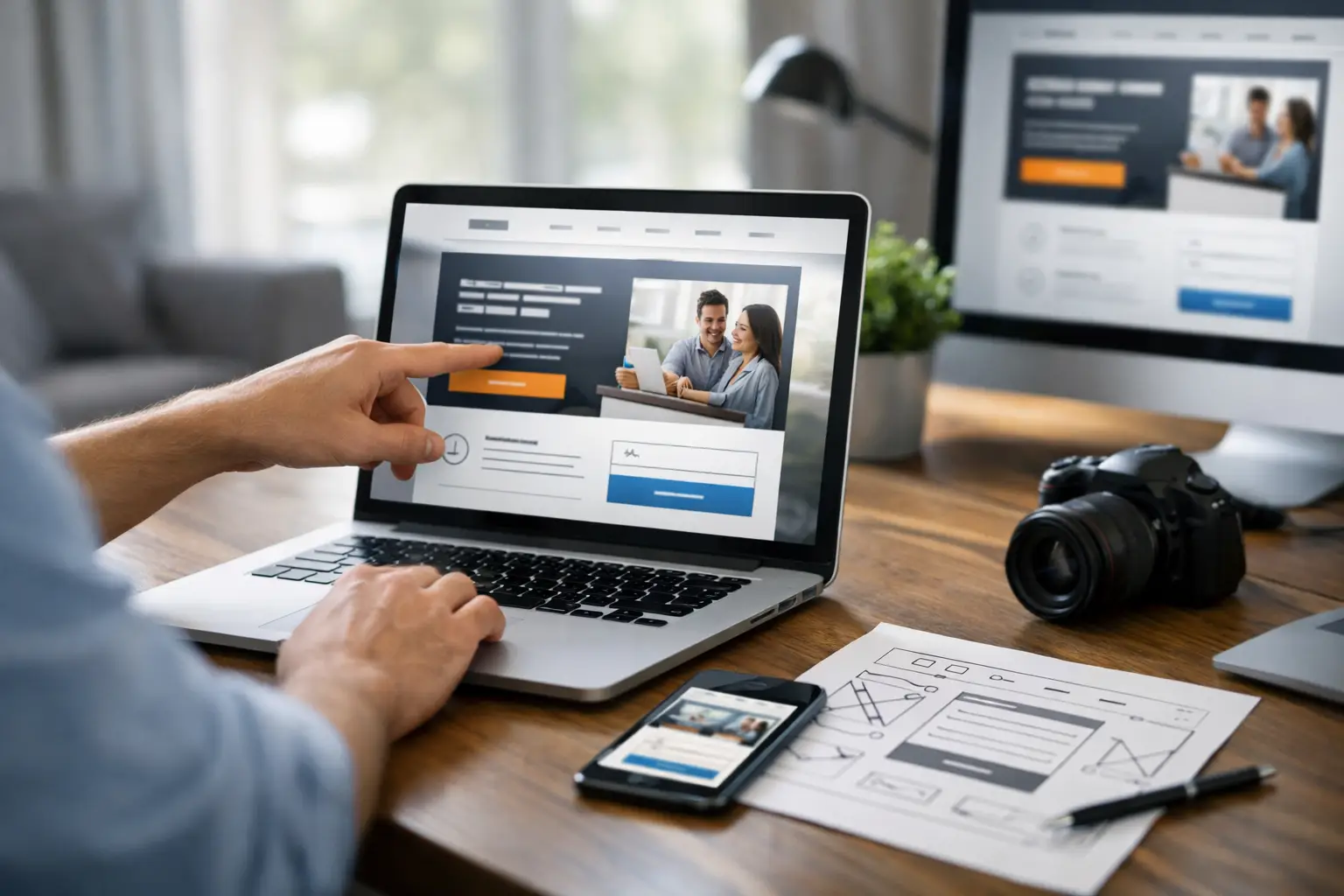
A bad squeeze page can ruin good traffic fast. If you’re paying for clicks and seeing weak opt-in rates, inconsistent leads, or junk signups, the problem is often not the traffic alone. In many cases, custom squeeze page design is the missing piece between real human visitors and real business results.
For affiliate marketers, MLM builders, network marketers, and funnel owners, this matters more than most people admit. You can buy traffic from a decent source, send it to a generic page, and still lose money. The page has one job: turn attention into action. If it fails, everything behind it gets harder.
What custom squeeze page design actually means
Custom squeeze page design is not just making a page look better. It means building a page around a specific offer, a specific audience, and a specific traffic source. The message, layout, form, headline, proof, and call to action all need to match why that visitor clicked in the first place.
That is where many marketers get stuck. They use a recycled template, swap out a headline, and hope the numbers improve. Sometimes that works for a while. Usually it doesn’t hold up, especially when traffic costs rise or lead quality starts slipping.
A custom page gives you more control over conversion. It lets you shape the first impression, remove distractions, and create a cleaner path to the opt-in. That does not mean the page needs to be fancy. In direct response, simple usually wins. But simple is not the same as generic.
Why generic pages often fail with paid traffic
When someone lands on your page, they make a decision in seconds. If the offer feels vague, overhyped, or disconnected from the ad or traffic source, trust drops right away. That is especially true for audiences in affiliate marketing, make money online, and network marketing, where people have seen too many weak promises and too many low-effort funnels.
A generic page often misses the real conversion triggers. It may ask for too much too soon. It may use copy that sounds inflated. It may have a headline that could apply to anything. Or it may bury the reason to opt in under clutter, stock design elements, and distractions that pull attention away from the form.
Paid traffic makes those flaws expensive. You are not just losing page views. You are losing budget, momentum, and follow-up opportunities. Worse, if your page brings in the wrong kind of lead, your email performance drops and your back-end sales suffer too.
That is why serious marketers care about more than click volume. They care about whether the page helps filter and convert the right people.
The core elements of high-performing custom squeeze page design
A strong page starts with message match. The headline should feel like a natural continuation of the click. If the visitor came in looking for leads, list growth, or a simple way to generate prospects, the page should confirm that immediately. Not with vague claims, but with a clear benefit.
The next piece is clarity. Visitors should know what they are getting, why it matters, and what to do next without effort. If they have to guess, conversion usually drops. Short copy often works well here, but short does not mean thin. A few direct sentences can outperform a long block of filler every time.
Design supports the message. Good custom squeeze page design uses visual hierarchy to make the main offer stand out. The headline gets attention first. The subheadline adds context. The form and button stay obvious. Supporting proof sits close enough to reduce doubt without creating friction.
Trust matters even more in cold traffic campaigns. Real people want signs that your page is credible. That can come from plain language, realistic claims, clean branding, and proof elements that feel believable. If the page looks like it is trying too hard, that can hurt response.
Then there is friction. Every extra field, distraction, or competing call to action lowers the odds of conversion. Sometimes asking only for an email is best. Sometimes adding a name field makes sense if better lead quality matters more than raw opt-in count. This is one of those areas where it depends on your follow-up strategy.
Design for lead quality, not just opt-in rate
A page that converts at 50 percent is not automatically better than one that converts at 30 percent. If the higher-converting page attracts weak leads who never open emails, never click, and never buy, the numbers can fool you.
This is where custom squeeze page design becomes a business decision, not just a design task. The right page should help pre-frame the lead. It should attract the prospect you actually want in your funnel and discourage the person who was never a fit.
For example, a broad freebie headline may produce more signups, but a tighter headline that speaks to serious marketers may produce fewer opt-ins with stronger buyer intent. If you care about ROI, that trade-off can be worth it.
Direct-response marketers know this already, at least in theory. But in practice, many still chase cheap leads instead of better leads. The result is a bloated list with weak engagement. A custom page helps fix that by aligning the message with the outcome you want downstream.
How traffic source should shape the page
Not all traffic behaves the same way, so your page should not treat every visitor the same. Someone clicking from a solo ad, an email drop, or a native placement may arrive with a different level of awareness and skepticism than someone coming from a warm audience or a branded search.
That means your page may need a different hook, a different amount of copy, or a different proof angle depending on where the click came from. Cold traffic usually needs faster trust-building. Warmer traffic may respond better to a tighter page with less explanation.
This is one reason done-for-you traffic campaigns perform better when the funnel is built with conversion in mind from the start. If the page and traffic are disconnected, lead quality usually suffers. If they are aligned, you have a better chance of turning real human traffic into real opt-ins and follow-up opportunities.
What to avoid in custom squeeze page design
The biggest mistake is trying to impress instead of convert. Fancy effects, overloaded layouts, and clever copy can get attention, but they often reduce response. Most visitors do not need to be entertained. They need to understand the offer and trust the next step.
Another mistake is making unrealistic promises. In the direct-response space, people are cautious for a reason. If your page sounds exaggerated, conversions may drop even if traffic volume stays steady. Strong offers do not need inflated language.
It is also common to ignore mobile behavior. A page may look solid on desktop and still underperform on phones, where a large share of paid traffic now happens. Form placement, headline length, button visibility, and page speed all matter here.
And finally, many marketers fail to test the right variables. Constantly changing colors and small design details rarely moves the needle much. Headline, offer angle, form length, and proof placement usually matter more.
When done-for-you support makes sense
If you are building funnels all day, you may have the skill to handle this yourself. But many marketers do not have the time to write, design, test, and connect every moving part well. They end up buying traffic before the page is ready, then blaming the source when results disappoint.
That is where outside help can make sense, especially if the provider understands direct response and lead quality instead of vanity metrics. A service like Extreme Lead Program fits best when the goal is not just getting visitors, but building a cleaner path from click to opt-in to buyer.
The key is simplicity. A page should support the campaign, not turn into a project that drags on for weeks. Fast execution matters. So does trust. If your traffic is real but your page is weak, you still lose. If both pieces work together, performance becomes easier to measure and improve.
A better page gives good traffic a fair chance
Custom squeeze page design is not magic, and it will not fix a bad offer. But it can dramatically improve what happens after the click. For marketers who are tired of paying for traffic that looks fine on paper but falls apart in the funnel, that difference matters.
The smartest move is to treat your squeeze page like part of your traffic strategy, not an afterthought. When the page is built around the offer, the audience, and the quality of traffic you actually want, better opt-ins tend to follow. And when better opt-ins happen consistently, the rest of the business gets easier to grow.
A strong page does not need more hype. It needs more alignment, more clarity, and more trust.
Leave a Reply