
Buyers vs. Freebie Seekers: How to Attract Leads That Convert
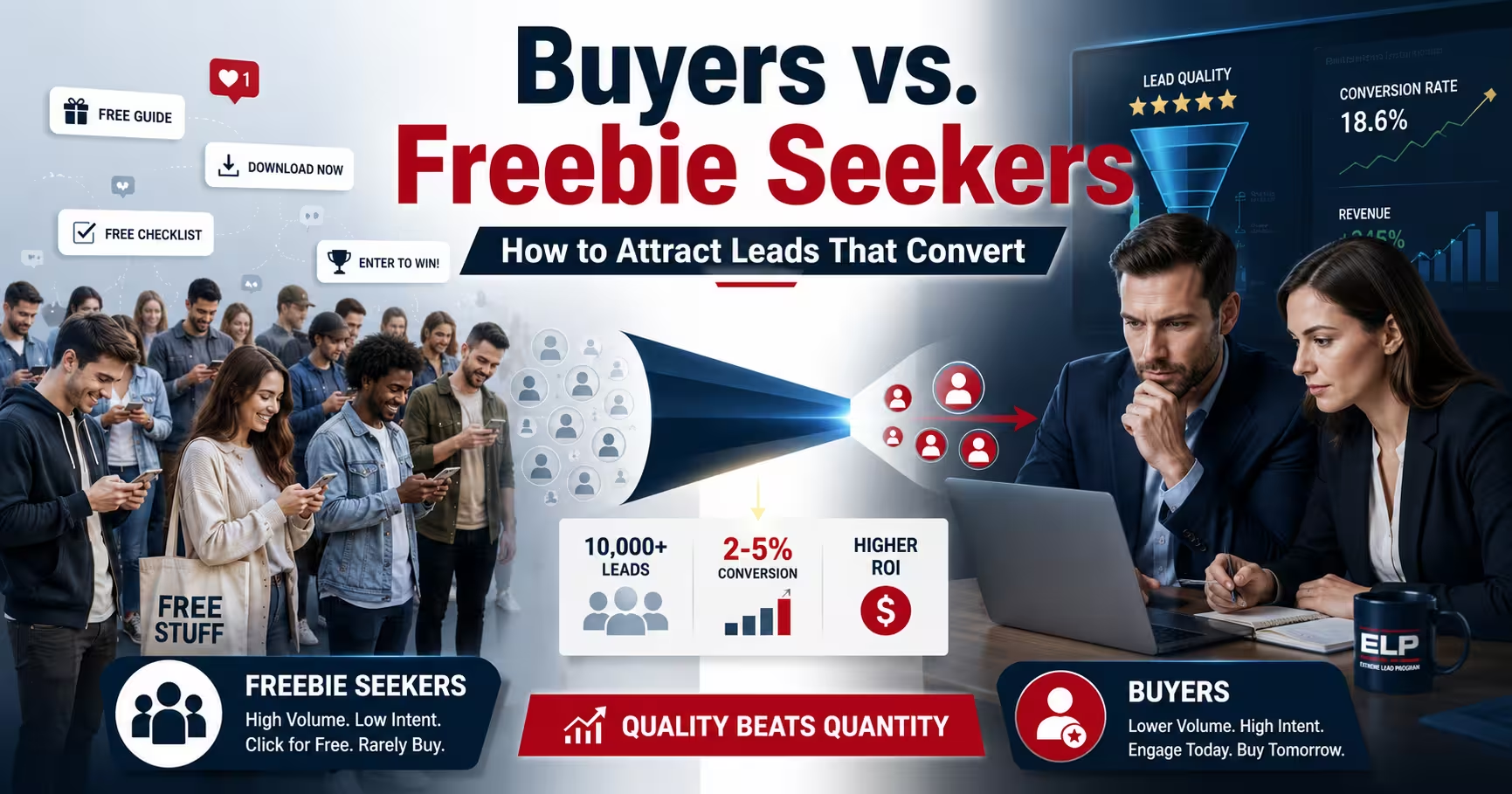
A lead opts in, opens the first email, and disappears. Another lead joins at a higher cost, asks a question, clicks through, and eventually buys. That is the real issue behind buyers vs freebie seekers. The goal is not to collect the largest possible list. It is to build a list with enough genuine buying intent to support your offer, your follow-up, and your ROI.
For affiliate marketers, network marketers, funnel builders, and offer owners, bad traffic creates a costly illusion. Your dashboard may show visits, clicks, and even opt-ins, yet your sales page stays quiet. The problem is often not the offer alone. It is the gap between the traffic you attract and the action your business needs people to take.
Buyers vs Freebie Seekers: The Difference That Matters
A buyer is not simply someone with money. A buyer is someone with a problem they want solved, enough trust to consider a solution, and a willingness to make a decision. They may not purchase immediately, but their behavior shows commercial intent. They read the offer, respond to relevant emails, watch a presentation, compare options, or ask questions that move toward a decision.
A freebie seeker is primarily motivated by access without commitment. They may download every checklist, join every giveaway, and open emails only when another free resource is offered. That does not make them bad people or worthless contacts. Some will become buyers over time. But if your entire lead source is built around attracting people who want only free material, your list can become expensive to maintain and difficult to monetize.
The distinction is about behavior and economics, not judgment. A person who joins for a free training can still be a strong prospect if the training solves a real problem and naturally leads to a paid next step. The issue begins when the free offer is disconnected from the paid offer, or when the traffic source rewards volume without any concern for fit.
Why Cheap Leads Often Cost More
Low cost per lead looks good until you measure what happens after the opt-in. A $0.50 lead that never opens, clicks, replies, or buys is not automatically better than a $3 lead that produces sales and referrals. Cost per lead is an entry metric. Cost per qualified lead and cost per customer tell you more about the health of your funnel.
Many marketers get trapped by vanity numbers because they are easy to see. A traffic provider delivers thousands of visitors. An opt-in page generates a large batch of new names. The campaign appears active. But if those visitors are bots, incentive-driven clicks, untargeted traffic, or people trained to chase giveaways, the apparent bargain can drain your budget.
Real human traffic is the foundation. From there, relevance matters. Someone interested in building a business, generating leads, or improving a funnel is more likely to engage with a relevant offer than someone clicking only to earn a reward or access an unrelated giveaway.
Higher-quality traffic may cost more upfront. That is a reasonable trade-off when it creates stronger engagement, more sales conversations, and a list that retains value. The right question is not, “What is the cheapest traffic I can buy?” It is, “What traffic gives my funnel the best chance to produce a customer?”
Traffic Source A: 100 leads at $1 each = $100 spent, but only one $50 sale.
Traffic Source B: 30 leads at $3 each = $90 spent, but three $50 sales.
Source B produced fewer and more expensive leads—but generated far better business results.
Clicks Alone Do Not Tell You Whether Your Traffic Is Working
See how ELP tracks real Tier-1 visitors, engagement, opt-ins, and traffic quality after the click.
Your Offer Attracts the Behavior You Get
Your lead magnet is a filter. If you promise a broad, low-effort free reward, you will attract a broad, low-effort audience. If you offer a practical resource designed for a specific problem your buyer already wants to solve, you have a better chance of attracting intent.
Consider the difference between “Get Free Stuff Online” and “A 10-Minute Follow-Up Framework for New Affiliate Leads.” The first message invites anyone who wants something free. The second speaks to a marketer who already has leads or wants to handle leads more effectively. It is narrower, but the people who respond are more likely to match a relevant paid offer.
This does not mean every opt-in page needs to be aggressive or overly restrictive. Free content remains one of the best ways to build trust. The key is alignment. Your free resource should introduce the same problem, audience, and outcome that your next offer addresses.
If you sell funnel setup, attract people who need a clearer funnel. If you promote a business opportunity, attract people willing to evaluate a business model, not just collect a motivational PDF. If you sell traffic services, speak to marketers who care about lead quality and conversion data, not only a cheap visitor count.
Measure Intent After the Opt-In
You cannot fully identify buyers from an email address alone. You can identify patterns over time. The most useful lead-quality metrics happen after the initial conversion.
Watch four areas closely:
- Email engagement, including opens, clicks, replies, and repeat interaction.
- Offer engagement, such as sales-page visits, video watch time, application starts, or checkout activity.
- Sales outcomes, including first purchases, average order value, refunds, and repeat purchases.
- Source-level performance, so you can see which traffic segments produce engaged prospects rather than only opt-ins.
Do not overreact to one campaign or a small batch of leads. A lead source may need enough volume and a reasonable follow-up period before you can judge it fairly. A lower open rate can still be profitable if the buyers who do engage purchase at a meaningful rate. On the other hand, a source with high opens but zero offer clicks may be producing curiosity rather than commercial intent.
The point is to connect traffic data to revenue behavior. When you know which sources, messages, and pages generate sales activity, you can make decisions based on evidence instead of assumptions.
Build a Funnel That Qualifies Without Killing Conversions
Some marketers respond to poor lead quality by adding too many steps, forms, and barriers. That can reduce freebie seekers, but it can also push away legitimate prospects who are short on time or unsure what happens next. Qualification should be purposeful, not complicated.
Start with clear positioning. Tell visitors who the resource is for, what problem it helps solve, and what they can expect after opting in. This simple clarity naturally discourages people who are not a fit.
Then use your thank-you page and first few emails to continue the conversation. Do not treat the opt-in as the finish line. Introduce the next logical step, explain why it matters, and invite the prospect to engage. A strong follow-up sequence can separate active prospects from passive subscribers quickly.
For higher-ticket offers, a short application, a survey, or a booking step may make sense. For lower-priced affiliate offers or entry-level products, direct education and a simple recommendation often work better. The right level of qualification depends on your offer price, sales cycle, and audience awareness.
Do Not Write Off Every Freebie Seeker
There is a practical reason to avoid treating every non-buyer as dead weight. Some people need more time, proof, or education before they buy. They may be new to your niche, skeptical after previous bad experiences, or still trying to understand which solution fits them.
The better approach is segmentation. Let behavior guide your follow-up. Subscribers who click product-related emails, attend trainings, reply with questions, or revisit your offer deserve more focused communication. People who only respond to free downloads can remain on a lighter educational track rather than receiving the same sales messaging every day.
This protects your deliverability and keeps your message relevant. It also gives genuine prospects room to move at their own pace without forcing a hard sell too early.
Choose Traffic for Business Outcomes
Traffic quality starts before the visitor reaches your page. Ask how the traffic is generated, whether it comes from real people, how targeting works, and what reporting you receive. Be cautious with providers that emphasize massive visitor totals while avoiding questions about engagement, lead quality, or conversion performance.
A trustworthy source should make it easier to evaluate results, not harder. You need clear tracking, realistic expectations, and enough consistency to test your funnel properly. No traffic source can guarantee that every lead will buy. Your offer, page, follow-up, and market all affect conversion. But quality traffic gives those elements a real chance to work.
Extreme Lead Program is built around that principle: real human traffic, list growth, and conversion-focused lead generation rather than inflated numbers that look impressive but fail to produce business results.
The list that changes your business is rarely the biggest one. It is the one filled with real people who recognize the problem you solve, trust the value you provide, and have a credible path to becoming customers.
Related Topics:
Leave a Reply