Solo Ads vs Facebook Ads: Which Drives More Leads?
A traffic source is only as valuable as the people it puts in front of your offer. That is the real question behind solo ads vs facebook ads. Both can generate clicks quickly. Both can build a list. But they operate very differently, and choosing based on the cheapest click can leave you with unsubscribes, weak opt-ins, and no sales.
For affiliate marketers, network marketers, and funnel builders, the better option depends on your offer, your funnel, your budget, and how much control you need over the traffic. The goal is not to buy more visitors. It is to bring real people into a conversion path that produces leads and future buyers.
Solo Ads vs Facebook Ads: The Core Difference
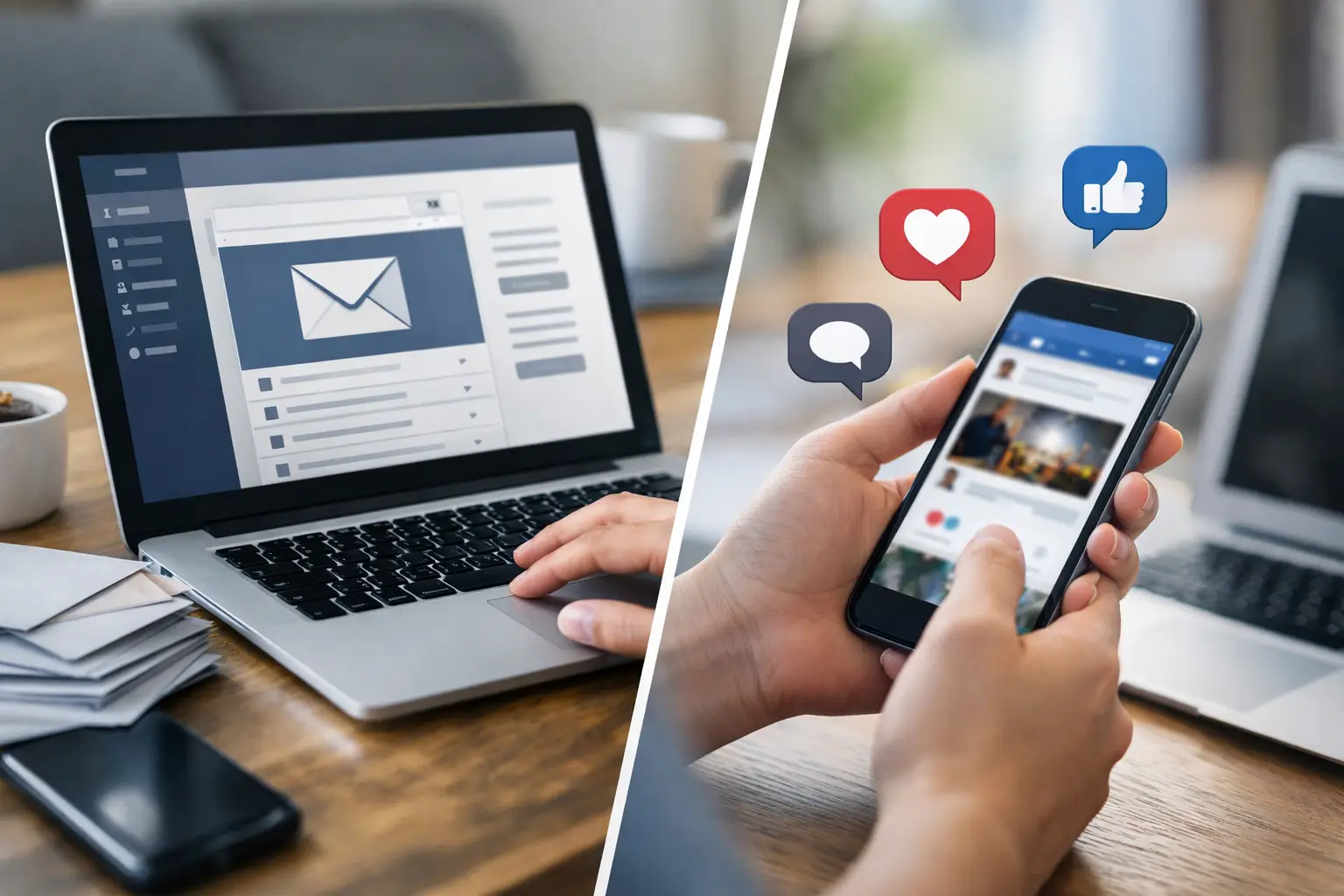
A solo ad is an email placement. You pay a list owner to send your offer to their subscribers, usually with an agreed number of clicks. The list owner handles the email send, while you provide the link and often the swipe copy. Your results depend heavily on the quality, relevance, and engagement of that person’s list.
Facebook ads are paid placements shown to people inside the Facebook and Instagram ecosystem. You build the campaign, define the audience, create the ad, and send traffic to a landing page, lead form, or other destination. Facebook’s system then attempts to find people likely to take the action you want.
The practical difference is simple: solo ads borrow someone else’s audience, while Facebook ads let you build and refine your own audience over time. Solo ads can be faster to launch. Facebook offers more targeting, more testing options, and more control, but requires more skill and active management.
| Solo Ads | Facebook Ads | |
|---|---|---|
| Setup Speed | Fast | Slower |
| Targeting Control | Limited | Extensive |
| Creative Required | Minimal | Yes |
| Learning Curve | Low | Moderate/High |
| Best For | Fast list-building tests | Scalable targeted campaigns |
| Optimization | Mostly landing page/funnel | Ads + audience + funnel |
| Traffic Source Control | Vendor dependent | Platform controlled |
Solo Ads Make Sense When You Want Fast Traffic Without Building an Ad Campaign
Solo ads can be useful when you have a straightforward lead-generation funnel and want to test it with a fast burst of traffic. They are often attractive to marketers who do not want to learn ad account setup, creative testing, tracking configuration, and campaign optimization before they get their first visitors.
A good solo ad can send responsive, real human traffic to a simple opt-in page quickly. If your lead magnet is clear, your page loads fast, and your follow-up sequence does its job, you may be able to build a list without waiting for a social ad campaign to stabilize.
That speed comes with a major condition: the vendor matters more than the traffic source itself. One seller may have a responsive, relevant audience made up of active email subscribers. Another may have a recycled list, poor-quality clicks, or an audience that has seen too many similar offers. You cannot judge a solo ad provider by a screenshot of clicks alone.
Before buying, ask how the list was built, what niches it serves, whether traffic is filtered for bots and duplicates, and how often subscribers receive promotions. Ask for recent proof of delivery and realistic expectations. A trustworthy seller should be comfortable discussing traffic quality, not just promising a large number of visitors.
Solo ads work best when your funnel is already simple and conversion-focused. If you send cold traffic to a long sales page with no reason to opt in first, you may pay for clicks that disappear. A focused page, a relevant lead magnet, and a credible next step generally give you a better chance of turning traffic into an asset.
Solo Ads Are Fast — But You Give Up Some Targeting Control
The biggest limitation is reduced control. You do not control the list, the sender’s relationship with subscribers, or the exact context around the email. You also have limited ability to segment the audience before the click.
Scaling can be difficult as well. A vendor may deliver good results once, then performance drops on the next order because the same subscribers have already seen your offer. You can rotate vendors, but consistency takes work. Solo ads are a traffic purchase, not a complete acquisition system.
They also demand strong lead follow-up. Many solo-ad subscribers are accustomed to seeing offers. That does not make them bad leads, but it means your email sequence needs to establish trust quickly and give people a clear reason to stay engaged.
The bigger issue isn’t whether solo ads work — it’s whether the traffic is actually what the seller claims. That’s why ELP independently tracks traffic after the click through Traffic OS, including delivery quality, location, engagement, and conversion activity.
Facebook Ads Make Sense When You Want More Targeting and Optimization Control
Facebook ads make sense when you want targeting control, repeatable testing, and a traffic system you can improve over time. Instead of relying on a list owner’s audience, you can test interests, demographics, creative angles, landing pages, and conversion events.
This is especially valuable when you know who your best prospects are. An affiliate marketer promoting a specific product category, for example, can test messages that speak directly to the problem the offer solves. A network marketer can focus on compliant lead-generation messaging rather than leading with broad income claims that attract the wrong people and create platform problems.
Facebook also gives you more room to learn from your data. With proper tracking, you can see which ads generate opt-ins, which audiences produce lower-cost leads, and which leads actually move toward a sale. Over time, that information can improve both your ads and your funnel.
The trade-off is that Facebook is not plug-and-play. You need ads that earn attention, a landing page that matches the ad promise, and a budget large enough to test without making decisions from a handful of clicks. Campaigns can also be affected by ad disapprovals, account restrictions, audience fatigue, and rising costs.
Facebook Gives You More Control — But Requires More Testing, Creative, and Management
Facebook’s targeting tools do not replace offer-market fit. A polished campaign cannot rescue a vague lead magnet, a slow page, or a weak follow-up sequence. It can simply help you spend money faster while learning that the funnel needs work.
Lead quality can also vary widely. A low cost per lead is not automatically a win if those contacts never open an email, attend a presentation, or consider an offer. The right metric is not just cost per opt-in. It is cost per engaged lead, appointment, sale, or customer, depending on your business model.
For beginners, the learning curve can be expensive. That does not mean Facebook is a poor choice. It means you should start with a controlled test, clear tracking, and a realistic expectation that optimization takes time.
How to Choose the Right Traffic Source
Choose solo ads when speed and simplicity are your priorities, you have a proven or at least well-structured opt-in funnel, and you can access a seller with a relevant, transparent audience. They are often a practical fit for a short-term list-building test or a marketer who wants done-for-you traffic without managing an ad platform daily.
Choose Facebook ads when you want more control over who sees your message, have the ability to test creative and landing pages, and are building a repeatable acquisition channel. Facebook is usually the stronger long-term option for marketers willing to develop an ad system instead of buying one-time traffic bursts.
In many cases, the best answer is not either-or. Use a small solo-ad test to pressure-test your landing page and email follow-up. Then use what you learn to improve your Facebook campaign messaging. Or use Facebook to establish a baseline cost per qualified lead, then compare that result against a carefully vetted solo-ad source.
The comparison must be fair. Track traffic by source, monitor opt-in rate, watch email engagement for at least several days, and measure downstream outcomes. If one source generates 100 leads and another produces 60, the source with fewer leads may still win if those people reply, book calls, purchase, or remain active on your list.
Build the Funnel Before You Scale Traffic
Whether you choose solo ads or Facebook ads, your traffic should enter a clear conversion path. The first page should make one promise and ask for one action. The lead magnet should solve a relevant problem or create a useful next step. Your follow-up should continue the conversation instead of immediately burying the subscriber under offers.
This is where many campaigns fail. The marketer blames the clicks when the real issue is a disconnected funnel: an ad or email promotes one outcome, the landing page says something else, and the follow-up has no consistent message. Better traffic helps, but message match is what gives quality traffic a reason to convert.
Extreme Lead Program is built around that practical standard: real human traffic, lead quality, and funnels designed to turn attention into measurable business opportunities. The focus should always be on the people behind the clicks and what happens after they opt in.
Do not choose a traffic source because someone says it is cheap, easy, or guaranteed to produce sales. Choose it because you can measure the quality of the leads, match the source to your offer, and improve the process with each test. That is how traffic becomes a list, and a list becomes a business asset.
Related Topics:
Leave a Reply