
How Marketers Can Choose a Trusted Traffic Provider: 7 Checks Before Buying
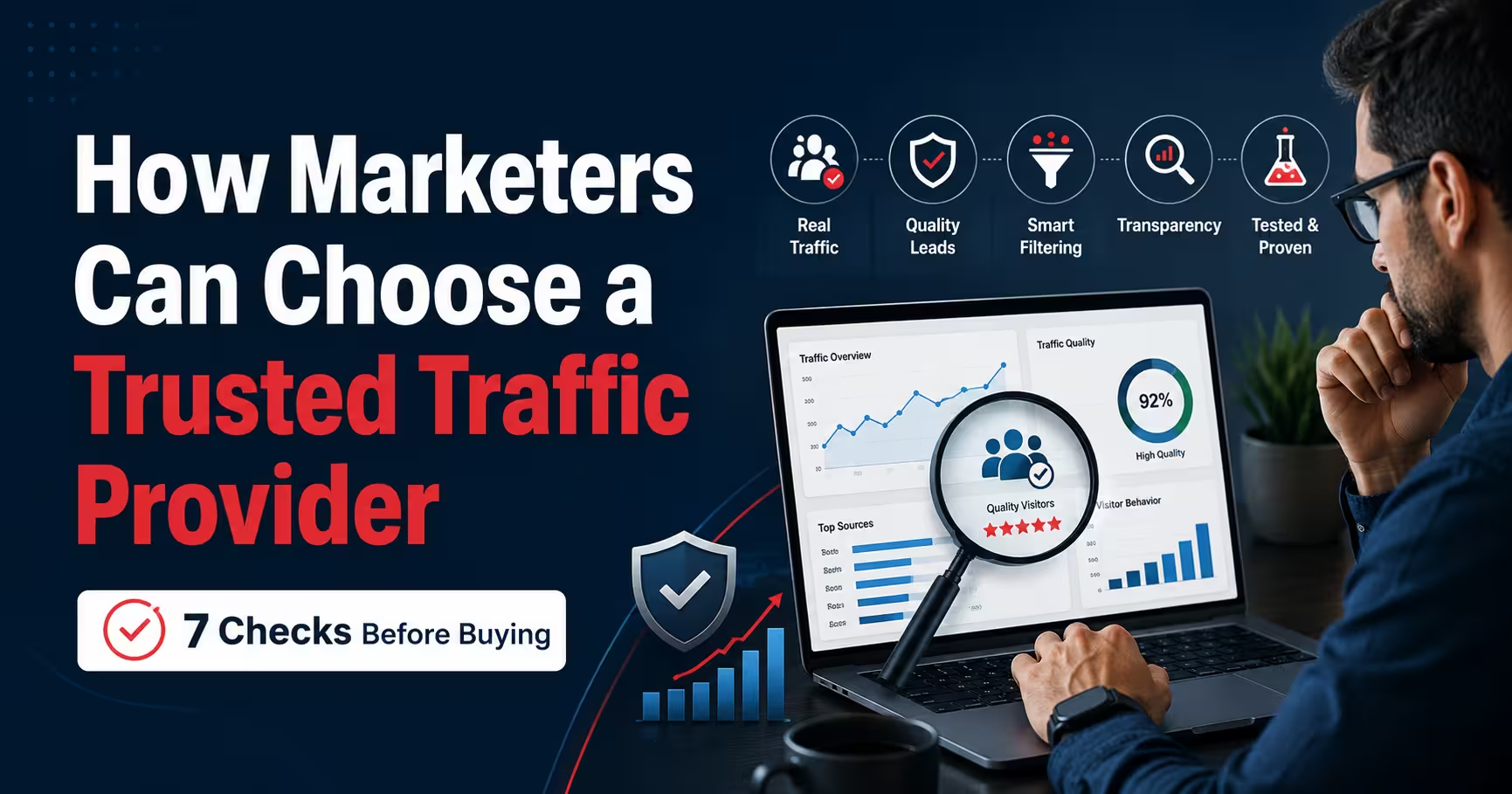
A traffic seller can show you thousands of visits and still leave your list empty. That is the expensive lesson behind the search for trusted traffic providers for marketers. Direct-response marketers do not need prettier dashboards or inflated visitor totals. They need real people who can see an offer, enter an email address, respond to follow-up, and potentially become customers.
That distinction changes how you evaluate a provider. Cheap clicks are easy to buy. Quality traffic that fits your funnel, respects your budget, and creates a measurable opportunity for conversion takes more care. If you promote affiliate offers, build a network marketing team, grow an MMO list, or run funnels for clients, the provider you choose can either strengthen your business or quietly drain it.
Why traffic volume is the wrong first metric
Traffic volume feels concrete. A seller promises 5,000 visitors, the numbers appear in your analytics, and the campaign looks active. But visitors alone do not tell you whether those people were real, whether they matched your offer, or whether they had any reason to take the next step.
The useful question is not, “How much traffic do I get?” It is, “What does this traffic do inside my funnel?” Watch opt-ins, email confirmation rates, engagement, unsubscribes, replies, sales conversations, and purchases. A smaller campaign that produces engaged subscribers is usually more valuable than a large campaign that generates disposable leads.
This does not mean every lead must buy immediately. Many direct-response offers require follow-up and trust before a sale happens. It does mean the first action should look credible. If a campaign produces clicks but almost no opt-ins, unusually low-quality email addresses, or a sudden wave of unsubscribes, the traffic is not helping you build an asset.
7 checks for trusted traffic providers for marketers
1. Ask how the traffic is sourced
A trustworthy provider should be able to explain, in plain language, where visitors come from. You are not asking them to disclose every business relationship. You are asking for enough clarity to understand whether the source is legitimate and appropriate for your campaign.
Look for real human traffic from identifiable promotional methods, audience placements, email exposure, publisher networks, or established advertising channels. Be cautious when the answer is vague, overly technical, or centered only on massive delivery numbers. If the source cannot be described clearly, you cannot judge whether it is likely to fit your audience.
Source transparency also protects your reputation. A lead who arrives through an honest, relevant promotion is far more likely to engage than someone pushed through misleading messaging or low-intent placements.
2. Define what counts as a visitor before you pay
Not every provider uses the word “visitor” the same way. One may count a page load. Another may count a unique click. Another may report all activity, including repeat visits or traffic that never fully loads your page. Those differences can make two offers that look identical on paper perform very differently.
Ask whether delivery is unique, geo-targeted, filtered, and tracked. If Tier-1 traffic matters to your offer, confirm the countries included rather than assuming. For marketers focused on the United States, a campaign that delivers primarily from other regions can distort conversion data and produce leads that are hard to serve.
You should also know the delivery window. A fast burst of traffic can be useful for testing, but it can overwhelm a new funnel, make it harder to identify problems, and create an unnatural spike in email activity. A controlled delivery pace is often easier to evaluate and manage.
3. Require a clear test campaign
A provider does not become trustworthy because of a bold promise. Trust is earned through a small, measurable test. Start with a campaign size you can afford to treat as data gathering, not as a guaranteed profit event.
Before the campaign begins, decide what success looks like for your funnel. That may be a target opt-in rate, a reasonable cost per lead, a percentage of confirmed subscribers, or a set number of sales calls. Keep the test simple. Change as few funnel variables as possible so you can see what the traffic is actually doing.
A legitimate provider should be comfortable with this approach. The goal is not to demand guarantees that no ethical marketer can make. Funnel conversion depends on the offer, page, messaging, price, audience fit, and follow-up. The goal is to create an honest baseline that tells you whether a larger order makes sense.
Want to test traffic before committing to a larger order?
Start with our $27 Traffic Test and evaluate the visitors, opt-ins, and lead activity for yourself.
4. Look beyond the opt-in rate
Opt-ins matter, but they are only the first signal. A page can produce a high opt-in rate with weak incentives, vague promises, or an audience that has no real interest in what happens next. Those leads often damage your email metrics and waste time in follow-up.
Review what happens after the opt-in. Do subscribers open the first email? Do they click? Are bounce rates normal? Do they respond to relevant messages, book calls, watch presentations, or purchase entry-level offers? Your exact metrics will depend on your business model, but the principle is the same: lead quality is revealed over time.
For example, an affiliate marketer may value clicks to a bridge page and downstream sales. A network marketer may care more about webinar attendance, application completions, or conversation quality. A funnel builder selling low-ticket products may prioritize buyer conversion and the ability to recover ad spend. Traffic should be measured against the business outcome it is meant to support.
5. Check for filtering and quality controls
Good providers take traffic quality seriously before visitors reach your page. Ask whether they use filtering practices designed to reduce bots, duplicate activity, suspicious clicks, and low-quality sources. No traffic source is perfect, but a provider should have standards and be willing to address obvious quality concerns.
Your own tracking should support that review. Watch for impossible behavior patterns, such as huge traffic bursts with almost no time on page, repeated clicks from the same source, strange geographic mismatches, or lead data that appears automated. One odd metric does not prove fraud. A repeated pattern across campaigns deserves attention.
Quality controls are especially important when you are building an email list. A list filled with invalid addresses or disengaged subscribers can hurt deliverability for the people who actually want to hear from you. Protecting your sending reputation is part of protecting ROI.
6. Evaluate communication before delivery
The way a provider communicates before taking your money often predicts what happens after the campaign starts. Are the details clear? Do they explain the order process, targeting options, delivery expectations, and what information they need from you? Can they answer direct questions without pressure or evasive language?
You should also understand the correction process. If delivery falls short, tracking breaks, or a clear quality issue appears, what happens next? A fair policy does not need to promise impossible outcomes. It should explain how the provider verifies delivery and handles legitimate problems.
This is where simplicity has real value. A done-for-you traffic service should reduce moving parts, not create a new technical project. Extreme Lead Program is built around that practical need: real human traffic and conversion-focused support for marketers who want to grow a list without chasing empty clicks.
7. Make sure your funnel is ready for real people
Even the best source cannot fix a confusing funnel. Before you send paid traffic, check the basics: your page loads quickly on mobile, the headline matches the ad or promotion, the form works, the next step is clear, and the follow-up email arrives when promised.
Give people a specific reason to opt in. “Join my list” is rarely enough. A useful training, a relevant checklist, a short case study, a product demo, or a focused presentation can work if it directly connects to the visitor’s problem. Then make sure the emails that follow continue the same conversation instead of switching abruptly into a hard sell.
If your results are weak, do not automatically blame the provider or the funnel. Diagnose both. Compare traffic behavior with page performance, test one meaningful change at a time, and give the campaign enough data to reveal a pattern. Good marketing decisions come from clean measurement, not guesswork.
The practical standard: can you scale with confidence?
The best traffic provider is not necessarily the one with the lowest cost per click. It is the one that gives you a dependable path from visitor to lead to customer opportunity. That path may begin with a modest test, but it should be transparent, trackable, and repeatable.
Choose partners who talk about people, lead quality, and outcomes rather than only clicks. Keep your funnel honest, track the steps that matter after the opt-in, and scale only when the numbers support it. A clean lead flow is more valuable than a noisy traffic spike, because it gives you something a real business can build on.
Leave a Reply