
Digital Marketing 101: A Beginner’s Guide to Getting Real Results Online
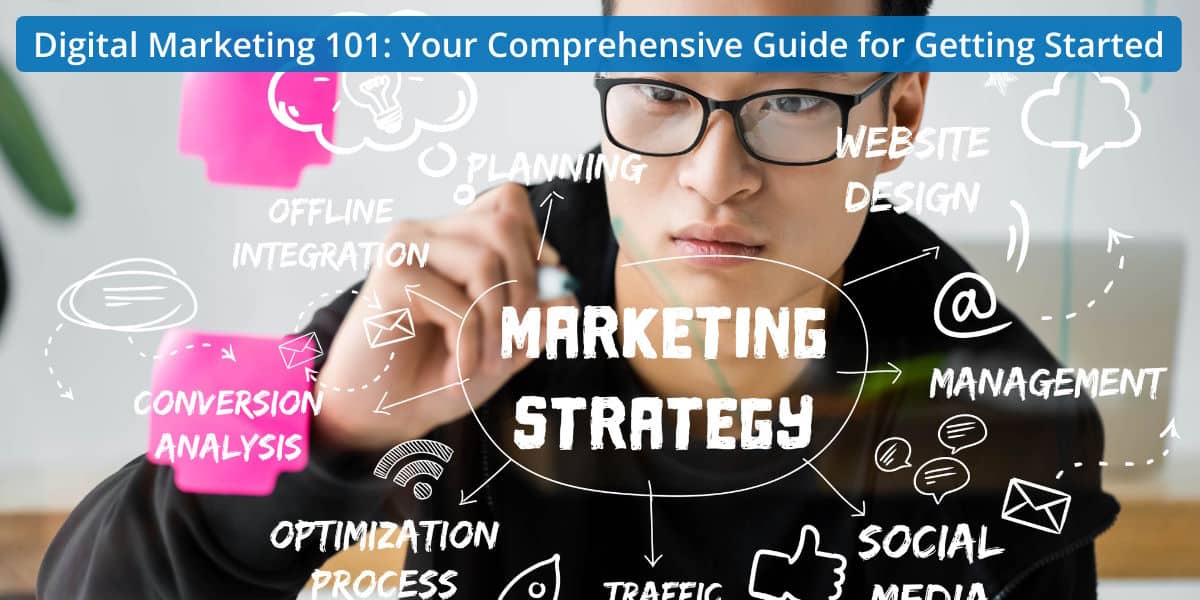
Digital marketing can feel overwhelming when you are just getting started.
There are websites, funnels, email lists, social media platforms, paid ads, SEO, SMS marketing, AI tools, tracking pixels, retargeting, and dozens of other things people tell you that you “need.”
But here is the truth:
Digital marketing does not have to be complicated.
At its core, digital marketing is simply the process of getting the right people to see your offer, building enough trust for them to take the next step, and following up until they are ready to buy.
That is it.
The tools change. The platforms change. The algorithms change. But the basic goal stays the same.
You need traffic.
You need a clear message.
You need a simple funnel.
You need follow-up.
And you need to know whether your efforts are actually producing leads and sales.
Today, more than 6 billion people use the internet globally, which means your customers, prospects, and future buyers are already online. The challenge is not whether people are out there. The challenge is getting in front of the right people with the right message.
What Is Digital Marketing?
Digital marketing is any marketing activity that uses the internet or digital communication channels to promote a product, service, business, opportunity, or offer.
That can include:
Search engine optimization
Paid advertising
Email marketing
SMS marketing
Social media marketing
Content marketing
Landing pages and funnels
Retargeting campaigns
Affiliate marketing
Lead generation campaigns
Video marketing
AI-assisted marketing
CRM and follow-up automation
The important thing to understand is this:
Digital marketing is not just about “getting clicks.”
Clicks are only useful if they come from real people who may actually be interested in what you offer.
That is where many beginners get frustrated. They start buying traffic, posting on social media, running ads, or sending people to a website — but nothing happens. No leads. No sales. No real momentum.
Most of the time, the problem is not digital marketing itself.
The problem is that the pieces are not working together.
The Digital Marketing System That Actually Matters
A lot of people treat digital marketing like a collection of random tactics.
They post on Facebook.
Then they try a Google ad.
Then they buy traffic.
Then they send an email.
Then they redesign their website.
Then they jump to the next thing.
That usually leads to wasted time and wasted money.
A better way to think about digital marketing is as a simple system:
Traffic → Offer → Funnel → Follow-Up → Conversion
Let’s break that down.
Traffic is the people visiting your website, landing page, funnel, offer, or lead capture page.
Your offer is what you want them to buy, join, request, watch, download, or sign up for.
Your funnel is the page or process that moves them from visitor to lead or customer.
Your follow-up is what happens after they opt in, request information, or show interest.
Your conversion is the action you actually want: a sale, lead, appointment, signup, or application.
When one of those pieces is weak, the whole system suffers.
You can have great traffic and a bad landing page.
You can have a strong offer and no follow-up.
You can have a beautiful website and no real visitors.
You can have lots of clicks but no trust.
Digital marketing works best when every part supports the next step.
The Main Types of Digital Marketing
There are many ways to market online, but most strategies fall into a few core categories.
1. Search Engine Optimization
Search engine optimization, or SEO, is the process of improving your website so it can show up in search engines when people look for information related to your business.
For example, someone might search:
“best traffic source for affiliate marketing”
“how to get leads for MLM”
“solo ads for affiliate offers”
“how to build an email list”
“lead generation for network marketers”
If your content answers those questions well, search traffic can become a long-term source of visitors.
SEO is powerful because people are already searching for something. They have intent.
But SEO is not instant. It takes time to build authority, publish helpful content, and earn visibility.
Google also continues to emphasize helpful, reliable, people-first content. That means your content should be written to genuinely help the reader, not just to stuff keywords onto a page.
2. Paid Traffic
Paid traffic is when you pay to get visitors to your website, funnel, landing page, or offer.
This can include:
Google Ads
Microsoft Ads
Facebook and Instagram ads
TikTok ads
YouTube ads
Solo email ads
SMS traffic
PPC traffic
Native ads
Push notification traffic
The advantage of paid traffic is speed.
You do not have to wait months for a blog post to rank. You can get visitors faster and start testing your offer.
The downside is that paid traffic can get expensive fast if you are sending people to the wrong page, targeting the wrong audience, or buying low-quality clicks.
This is why traffic quality matters.
A thousand fake clicks will not help your business. A smaller number of real visitors from real people in the right market is far more valuable.
3. Email Marketing
Email marketing is still one of the most important parts of digital marketing.
Why?
Because most people do not buy the first time they see your offer.
They need reminders.
They need more information.
They need proof.
They need trust.
They need to see your message more than once.
When someone joins your email list, you get the opportunity to follow up with them over time.
A good email sequence can:
Welcome new leads
Explain your offer
Answer common objections
Share testimonials or proof
Send people back to your website
Promote related products or services
Turn cold leads into warmer prospects
If you are buying traffic but not building an email list, you are leaving a lot of money on the table.
4. SMS Marketing
SMS marketing uses text messages to communicate with leads or customers.
Text messages can be powerful because they are direct and quick.
But SMS should be used carefully. People are protective of their phones. Your messages need to be relevant, permission-based, and respectful.
SMS can work well for:
Follow-up reminders
Appointment confirmations
Limited-time promotions
Lead reactivation
Simple call-to-action campaigns
For many businesses, SMS works best when combined with email and a CRM.
5. Social Media Marketing
Social media marketing uses platforms like Facebook, Instagram, TikTok, LinkedIn, YouTube, and X to build awareness, trust, and engagement.
Social media is useful because it lets people see your personality, your proof, your message, and your point of view.
But social media can also become a distraction.
Posting every day does not automatically mean you are building a business.
The key is to use social media with a goal.
Are you trying to build authority?
Drive traffic to a funnel?
Generate leads?
Retarget warm audiences?
Educate prospects?
Promote a product?
Once you know the goal, your content becomes much easier to plan.
6. Content Marketing
Content marketing is the process of creating helpful content that attracts and educates your target audience.
This includes:
Blog posts
Videos
Guides
Checklists
Case studies
Email newsletters
FAQs
Tutorials
Product comparisons
Resource pages
Content marketing builds trust before someone is ready to buy.
A good blog post can answer a question. A good video can explain a process. A good case study can prove that your solution works.
Content is also useful for SEO, email follow-up, social media, and retargeting.
One strong piece of content can become a blog post, email, short video, social post, and ad angle.
7. Funnel Marketing
A funnel is the path someone takes from first discovering you to becoming a lead or customer.
A simple funnel may look like this:
Ad or traffic source
Landing page
Opt-in form
Thank-you page
Email follow-up
Offer page
Checkout or contact form
The goal of a funnel is to make the next step obvious.
Many beginners send paid traffic to a homepage. That usually does not work as well as sending traffic to a focused landing page.
A homepage has too many options. A landing page has one main goal.
If you are buying traffic, building an email list, promoting an affiliate offer, or generating leads, a focused funnel is almost always better than sending people to a general website page.
What Has Changed in Digital Marketing?
Digital marketing today is different from what it was even a few years ago.
Here are some of the biggest changes.
AI Is Now Part of Search and Content
AI is changing how people search, research, compare options, and create content.
Google now has AI features such as AI Overviews and AI Mode, but Google’s own guidance says the same SEO fundamentals still matter: helpful content, strong page experience, crawlable pages, internal links, useful images or videos, and content that satisfies the searcher.
That means you should not write content just for algorithms.
Write content that answers real questions better than your competitors.
Mobile Experience Matters More Than Ever
Many people will see your website from a phone before they ever see it on a desktop.
Google also uses the mobile version of a site’s content for indexing and ranking through mobile-first indexing.
That means your pages need to be easy to read, easy to tap, and easy to act on from a mobile device.
Your buttons should be obvious.
Your forms should be simple.
Your pages should load quickly.
Your copy should be easy to scan.
Your offer should be clear without pinching and zooming.
Trust Is Harder to Earn
People have seen fake promises, fake traffic, fake reviews, fake screenshots, and overhyped claims.
That means your marketing needs to feel real.
Use proof.
Be clear.
Avoid exaggerated claims.
Explain what people get.
Show why they can trust you.
Make your guarantee easy to understand.
Trust is not built by saying “we are the best.”
Trust is built by showing people why you are different.
First-Party Data Is More Important
Platforms and privacy rules continue to change how tracking, targeting, and attribution work. Google’s Privacy Sandbox updates show that the ad industry continues to move toward more privacy-focused measurement and tracking approaches.
For everyday marketers, this means one thing:
You should build your own list and collect your own leads.
Do not rely only on social media followers, ad platform audiences, or third-party data.
Your email list, SMS list, CRM, customer list, and lead database are valuable assets.
The Biggest Mistake Beginners Make
The biggest mistake beginners make with digital marketing is chasing traffic before fixing the offer and funnel.
Traffic can expose a weak funnel quickly.
If your page is confusing, more traffic will not fix it.
If your offer is unclear, more clicks will not fix it.
If your follow-up is weak, more leads will not fix it.
Before you spend money or time driving traffic, make sure you can answer these questions:
Who is this for?
What problem does it solve?
Why should they trust you?
What happens after they click?
What is the next step?
How will you follow up?
How will you measure results?
If those answers are clear, traffic has a much better chance of turning into leads and sales.
How to Build a Simple Digital Marketing Plan
You do not need a complicated strategy to get started.
Start with the basics.
Step 1: Choose One Main Offer
Do not try to promote everything at once.
Pick one product, service, opportunity, or lead magnet.
Your message will be much stronger when it is focused.
Step 2: Know Your Target Audience
You need to know who you are trying to reach.
For example:
Affiliate marketers
Network marketers
Local business owners
People interested in work-from-home offers
Insurance prospects
Medicare prospects
Business opportunity seekers
Funnel builders
Email list builders
The more specific you are, the better your message will be.
Step 3: Create a Clear Landing Page
Your landing page should quickly explain:
What you offer
Who it is for
Why it matters
What they get
Why they should trust you
What to do next
Keep it simple.
Do not make people hunt for the button.
Step 4: Add Follow-Up
Most leads will not buy immediately.
Use email, SMS, or CRM automation to follow up.
Your follow-up should educate, remind, build trust, and bring people back to your offer.
Step 5: Drive Real Traffic
Once your offer, page, and follow-up are ready, start sending traffic.
This is where quality matters.
You want real people.
Real clicks.
Real visitors.
Real potential buyers.
Not bots.
Not junk clicks.
Not fake engagement.
If you are testing an offer, start with a small traffic campaign and watch your numbers.
Ready to Send Real Traffic to Your Funnel?
How to Know If Your Digital Marketing Is Working
You do not need to track everything at first.
Start with the numbers that actually matter.
How many visitors came to the page?
How many opted in?
How many clicked the next step?
How many replied, booked, bought, or requested more information?
How much did the traffic cost?
How much revenue or lead value came back?
A campaign does not have to be perfect on day one.
Digital marketing is about testing and improving.
You may need to test:
A better headline
A simpler landing page
A stronger call to action
A different traffic source
A different audience
A better follow-up sequence
A different offer angle
The goal is not to guess forever.
The goal is to get data, improve the weak spots, and keep building.
Why Traffic Quality Matters So Much
Not all traffic is equal.
This is one of the most important lessons in digital marketing.
Some traffic looks good on paper but does nothing for your business.
You may see clicks in your stats, but no opt-ins.
You may see visitors, but no engagement.
You may see cheap traffic, but no real buyers.
That usually means the traffic is either poor quality, poorly matched to the offer, or not real human traffic.
Good traffic gives your funnel a fair test.
Bad traffic gives you bad data.
That is why marketers who have been burned by fake traffic providers become more careful over time.
They stop asking only, “How many clicks do I get?”
They start asking better questions:
Are these real people?
Where is the traffic coming from?
Does this audience match my offer?
Can I capture leads from this traffic?
Can I follow up with them?
Can this traffic produce real business activity?
That shift is important.
Digital marketing is not about vanity clicks.
It is about creating opportunities for real people to see your offer and take action.
Where Extreme Lead Program Fits In
If you already have a funnel, landing page, opt-in form, offer, or website, the next challenge is getting real visitors to it.
That is where Extreme Lead Program can help.
Extreme Lead Program provides real human traffic solutions for marketers who want more visibility, more leads, and more chances to convert.
This can include solo email ads, SMS traffic, PPC traffic, push notification traffic, Tier-1 website visitors, and other lead generation services.
The focus is simple:
Real clicks. Real people.
No technical setup.
No confusing ad dashboards.
No trying to figure it all out alone.
Just traffic solutions designed to help marketers get their offers in front of people.
Extreme Lead Program is especially useful for:
Affiliate marketers
MLM and network marketers
Lead generation marketers
Funnel builders
Email list builders
Business opportunity marketers
People who have bought traffic before and want a better experience
And with thousands of marketers served, hundreds of verified reviews, and a money-back guarantee, it gives beginners and experienced marketers a safer way to test traffic without trying to master every ad platform from scratch.
Start With Real Human Traffic
Final Thoughts
Digital marketing does not have to be confusing.
You do not need to be everywhere.
You do not need every tool.
You do not need to master every platform.
You need a clear offer, a simple funnel, real traffic, and consistent follow-up.
Start there.
Once the basics are working, you can improve your pages, test new traffic sources, build better content, create stronger emails, and scale what works.
The most important thing is to stop treating digital marketing like random activity.
Build a simple system.
Get real people to your offer.
Capture leads when possible.
Follow up consistently.
Track what happens.
Improve one piece at a time.
That is how digital marketing turns from confusing into profitable.
Leave a Reply